The signs of the zodiac did not come out of nowhere. Behind each of them lie thousands of years of watching the sky, the myths of ancient peoples and symbols found in the world’s great religions. Astrologers also link the signs to the so-called astrological ages – long eras during which the spring equinox point shifts against the background of successive constellations. Here are the most fascinating myths and legends connected with the twelve signs.
Aries – a symbol of sacrifice and rebirth
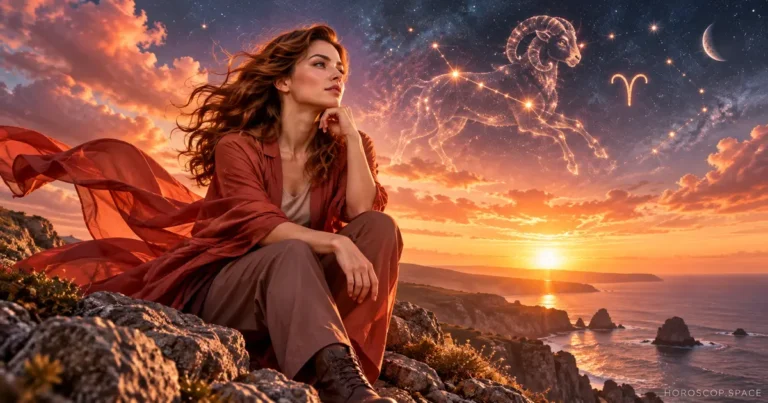
Greek culture developed in the Mediterranean basin from the second millennium BC, and an important place in its myths belongs to the ram with the Golden Fleece, which the Argonauts set out to find. It is this ram that tradition links with the constellation of Aries.
The young lamb also holds a special position in many religions. It is a symbol of innocence and of victory over evil won at the price of sacrifice. Every year the Israelites sacrificed a lamb in memory of their exodus from slavery in Egypt, and in Christianity the Lamb of God became a symbol of Christ and redemption – its role in that tradition is extremely important.
Taurus – the sacred animal of the ancients
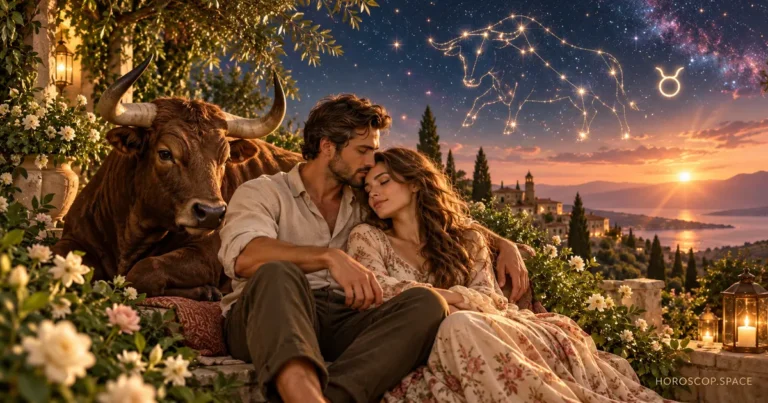
According to astrologers, the Age of Taurus ran from around 4000 to 2000 BC. This was the time when the Egyptians were building their mighty temples. In Mesopotamia people believed that the will of the gods was written in the sky. The Assyro-Babylonian weather god Adad was sometimes depicted as a bull, and on the first day of the new year the priests sacrificed a white bull.
The Egyptian Apis was also worshipped in the form of a bull – originally a fertility god, later linked with Osiris as Osiris-Apis and associated with the underworld. The Greek Zeus, too, turned himself into a bull in order to seduce and carry off the Phoenician princess Europa. In an Asian legend, when the Buddha summoned all the animals, only twelve species came, and the buffalo (ox) arrived second, just after the rat – hence its place in the Chinese zodiac.
Gemini – Castor and Pollux
The Age of Gemini ran from around 6000 to 4000 BC. This era is associated with growing contact between peoples, intellectual development and the beginnings of writing.
According to the Greeks, the two brightest stars of the constellation Gemini (Latin for “twins”) are Castor and Polydeuces (Pollux) – the twin brothers known as the Dioscuri, heroes and sons of Zeus and Leda. In ancient times the birth of twins was seen as a sign of divine intervention, and the Celtic peoples singled out twins, making them the heroes of important events. Twins have always embodied duality and the struggle of opposites – hence the astrological belief that this sign explains the contradictions within a single personality.
Cancer – life beneath a protective shell
The Age of Cancer ran from around 8000 to 6000 BC. People were then improving their living conditions, settling in more comfortable places and organising their communities better and better. The crab hidden in its shell symbolises life in a certain isolation from the outside world and the need for a safe refuge.
In India the constellation of Cancer was linked with the summer solstice, after which the Sun begins to lower its path across the sky. The sign of Cancer is ruled by the Moon – since time immemorial the mistress of the night, patroness of motherhood and fertility, who governs the ebb and flow of the seas. In Melanesia the crab was credited with the power to bestow fertility and with secret knowledge.
Leo – the royal power of the Sun
Since the earliest times people have looked on lions with admiration and respect – images of them appear in paintings some 20,000 years old. The lion’s solar strength lies at the root of many legends and myths. The lion and the Sun form an inseparable pair, and this symbolism is connected with figures such as the Greek Heracles (who defeated the Nemean lion), Apollo and the sun god Helios.
Many religions draw attention to the lion as the king of beasts, a symbol of royal power and the embodiment of courage. In the Far East the lion is sometimes likened to a benevolent dragon that drives away evil forces. The Old Testament mentions it too – in the Book of Kings, lions adorn the throne of Solomon.
Virgo – the mother goddess
Tradition links the sign of Virgo with the figures of great goddesses. One of the most important is the Egyptian Isis – goddess of the hearth and of motherhood, the most famous female deity of antiquity, worshipped far beyond Egypt. According to myth, Isis forced the supreme god Ra to reveal his true name, the source of his power, and in this way gained power over the world. She was worshipped as mother and nurturer, the embodiment of nature, mistress of the earth and of all its children.
Libra – a symbol of balance and justice
Twice a year, when the Sun stands above the equator, day and night become equal. The Sun’s entry into Libra, around 23 September, marks the autumn equinox – no wonder this sign became a symbol of balance.
Always and everywhere, scales have been associated with justice, good law and the pursuit of truth. They appear in many emblems and coats of arms, and as a symbol of the Last Judgement they feature in both the Bible and the Qur’an. In ancient Egypt the heart of the deceased was weighed on the scales to test its righteousness.
Scorpio – the power of life and death
The scorpion holds a special place in the myths and legends of ancient Egypt. It was credited with supernatural power, sacred hieroglyphic texts mention it, and its image was linked with the rule of one of the earliest rulers, known as the Scorpion King. In Mesopotamia, within the cycle of legends about Gilgamesh, we find the motif of scorpion-men guarding the gates beyond which the Sun rises.
The scorpion is a symbol of the earth – the natural opposite of the sky. It embodies magical power, a vital force that is at the same time deadly, as well as the drive towards individuality and transformation.
Sagittarius – the centaur with a bow
The zodiac depicts Sagittarius as a centaur – a being with the upper half of a man and the lower half of a horse, which gives it a double strength. In Greek mythology the race of centaurs descends from Ixion, who tried to seduce Hera, the wife of Zeus. Zeus slipped him a cloud shaped like his wife, and from this union the centaurs were born – wild creatures which, according to the myths, paid no heed to laws or customs. The constellation of Sagittarius, however, is more often associated with the wise centaur Chiron, teacher of heroes.
Sagittarius’s attribute – the bow and arrow – has special significance. According to Indian texts, the bow is a royal weapon entrusted to warriors who are to protect the community, and the arrow accompanies every battle and every pursuit of a goal.
Capricorn – the goat with a fish’s tail
Capricorn is sometimes depicted as a creature with the front of a goat and the tail of a fish. Ancient Greece connected it with sea deities and also with the god Pan – half man, half goat, guardian of flocks and shepherds – who, according to myth, leapt into the water while fleeing the monster Typhon and gained a fish’s tail. The goat was also an important sacrificial animal – in the Old Testament we find references to goats offered as burnt offerings and to the scapegoat, onto which the sins of the people were symbolically transferred.
Aquarius – the water bearer and the new age
According to astrologers, the Age of Aquarius, covering roughly AD 2000 to 4000, opens an era of great transformation that is meant to lead humanity into a new stage of its existence.
The traditional symbol of Aquarius is Ganymede – a beautiful youth carried off to Olympus by Zeus’s eagle, who filled the gods’ cups with nectar and was later placed among the stars as the constellation Aquarius. Aquarius is also depicted as a serene, spiritually mature person carrying one or two jugs. The water he pours from a heavenly spring purifies everything, renews ideas and prompts us to re-evaluate old views and seek a new truth.
Pisces – Poseidon’s dolphins
According to one story, Poseidon (the Roman Neptune), god of the seas, took a fancy to the Nereid Amphitrite. She, however, did not want to marry him and hid in the depths of the sea. A dolphin found her and persuaded her to marry, and Poseidon placed it in the sky out of gratitude. Another Greek legend tells of Aphrodite and Eros who, fleeing from Typhon, turned into fish tied together with a ribbon – hence the two fish in the sign’s symbol.
The beginning of the Age of Pisces is linked with the birth of Christ. The fish became one of the oldest Christian symbols, and Christ himself and the apostles were portrayed as “fishers of men”. The fish has long been a symbol of regeneration and rebirth as well.
First published (Polish original): 1 December 2010. Written by astrologers and esoteric specialists working with our editorial team; edited and translated for HOROSCOP.SPACE. © All rights reserved.