All over the world there are many traditional folk techniques that let you peer into the future. Practised by the uninitiated and based largely on superstition, they were meant above all to ease the fear of the unknown and to entertain.
Today the most widespread divination techniques include card reading, reading coffee grounds, astrology and the I Ching. In the past people even told fortunes from pebbles, from fire, water and wind, from counting twigs or from the flight of birds. There were hundreds of such techniques, but they spoke about the future only in very general terms. The divination systems popular today are broader and describe the possible future in much greater detail.
All these techniques work on the subconscious. There is common ground between the folk tradition of fortune-telling and occult prediction. It is worth understanding that anything, even the strangest object, can become a mechanism that releases the contents of the subconscious.
Divination and science
Down the ages divination and science have occasionally found common ground. Examples include graphology, the study of handwriting, and palmistry, the study of the lines of the hand. Both were long regarded as occult; in time attempts were made to use them as aids in assessing a person’s personality or condition, although their scientific value remains disputed.
Most divination techniques, however, have not won scientific recognition and remain part of secret knowledge.
Traditional methods of divination
Crystal ball gazing
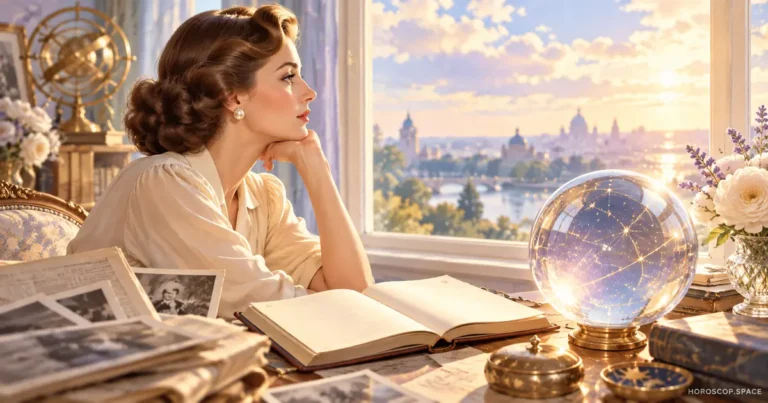
One traditional way of foretelling the future is gazing into a crystal ball, known as crystallomancy. It involves staring into a crystalline object, usually a sphere. Some explain how this method works as a kind of self-hypnosis.
Many of us picture a fortune-teller with a crystal ball and a black cat by her side. What can such a seer see in the ball? Where do the images of future events appear – inside the ball, or in the clairvoyant’s own subconscious? Every practitioner answers that question a little differently.
Contact with spirits
Another method is to call on the help of spirits. This kind of divination requires a basic knowledge of the spirit world – otherwise it is easy to believe anything that supposedly comes from a spirit, and that can be dangerous.
Clairvoyance
There are also various forms of clairvoyance. Some clairvoyants need only hold an object belonging to a person to tell a great deal about them. Others read from photographs or answer questions written on a slip of paper. Others still press a photograph to their forehead and “see” the life of the person in it.
The pendulum
A popular tool for releasing the subconscious on your own is the pendulum. Its movements are read as yes or no answers to the questions asked.
Numerology
Another tool is numerology, usually based on the Kabbalah. Numerologists start with a person’s name and date of birth, assigning different numerical values to individual letters.
Dreams
Another well-known method, open to everyone, is reading dreams. It is best, however, to skip the typical dream dictionaries and interpret for yourself the signs that appear to you in your sleep.
Water divination
For this reading you need a large, deep bowl of glass, bronze or silver, with handles on both sides. It is good to have a sprig of bay laurel to hand. You have to find out for yourself which bowl works best and how much water to pour into it. The water must be clean and fresh – from a stream, or boiled; tap water is never used. The ancient Greeks believed that spirits haunted water, especially when it was fresh and pure. It is best to collect it in the bowl at night, at the full moon or while it is raining.
You will also need a wand of laurel wood. Dip its tip into the water in the bowl until it is wet. From the water dripping off the wand you can intuitively infer what the future will look like – various images and hunches come to mind. According to tradition, this was Nostradamus’s favourite method.
Reading with playing cards
This reading uses 24 cards – the nines up to the aces. You begin by choosing one card to represent the person you are reading for. Then you shuffle the deck very thoroughly and lay the cards out in three rows of eight. Arrange them so that each card and its markings can be seen easily.
New Year readings
Since ancient times the turn of the year has been an important moment for fortune-telling. We all want the coming year to be better than the last – New Year wishes often boil down to the words “May the New Year be better than the old one”. Wanting to learn something about the months ahead, people have for centuries turned to readings, charms and household rituals. It is worth remembering, though, that a reading shows the possibilities that will open up on your path, not a verdict that cannot be changed.
A short history of fortune-telling
People have practised divination for ages – ever since humans began to think rationally. Since the belief that we can uncover the future arose in the human mind and still lingers there, many feel there must be something in it. We often meet people who believe in readings and trust that they can help, give direction and set out the most likely course of life. Over thousands of years hundreds of methods have been devised to help people understand themselves and predict the future.
At first fortunes were told for countries, civilisations, social groups, small states and settlements, and only later for individuals. In the beginning a reading meant seeking the advice of a shaman or priest on matters vital to life and survival – people asked about harvests, sowing and farming in general. Rulers of states and cities consulted oracles about wars and the future of the nation. Only later could people come to an oracle with personal questions. The earliest readings were very general and often answered simply “yes” or “no”. In time they became more and more elaborate and detailed.
Over the centuries great divination systems took shape. Those that survive today include astrology, whose roots go back several thousand years before the Common Era; numerology, more than two thousand years old; runes, which played an important role in magical and divinatory systems; and cartomancy – to this day one of the most elaborate and highly regarded methods of foretelling the future. Divination systems that predict the future while assuming that people have free will and can change it are classed as esotericism. In the past this field was associated with occultism; the term “esotericism” became widespread in the twentieth century.
In Poland today two disciplines play a particularly important role: astrology and cartomancy, or card reading. Every day you can read your horoscope and see what trends the coming year holds for your sign. A true birth chart, drawn up once for a whole lifetime, is based on your date, place and time of birth, however. With this data an astrologer reads the possibilities awaiting you in life, as well as your strengths and weaknesses. Other horoscopes, tied to specific questions, can also be cast.
Cartomancy – reading grandmother’s deck
A simpler way of getting to know a person, their emotions and desires and the direction in which they are heading, is cartomancy. It is a divination method that foretells the future with cards. Traditionally readings were done with classic cards, that is, ordinary playing cards. Many of us will surely remember grandmothers or great-grandmothers who told fortunes with just such simple cards.
Cards contain symbols, signs and archetypes, often deeply rooted in the psyche. Each card has several meanings and, combined with the other cards in a spread, can create different visions of the future. Everything depends on the interpretation and the reader’s inner strength. During a session the cards connect the reader with the person asking – through physical contact or, for instance, through a photograph. A bond forms which, practitioners believe, makes it possible to obtain information about the future. But where does it come from? The cards are the medium, the questioner is the transmitter, and the reader is the receiver.
How does a reading work? The conscious, subconscious and superconscious
According to this idea, deep down each of us knows where our life is heading, but cannot consciously define or predict it. A person functions on three planes: the conscious, the subconscious and the superconscious.
Consciousness is the basic mental state in which a person is aware of inner phenomena, such as thinking, and of what is happening around them, and is able to respond to it.
The subconscious is a concept found in many fields – psychology, esotericism, motivational techniques and some spiritual systems. Whatever we consciously think about ourselves, our goals and aspirations, we hold many subconscious attitudes and “programmes” towards ourselves, other people and life. The subconscious holds our reflections, dreams, plans, desires, feelings and emotions. It is also the gateway to the superconscious – our higher self.
The superconscious is where intuition reveals itself. Intuition knows perfectly well what is good and bad for us and in which direction our life is heading. It analyses our everyday decisions and choices and – according to esotericists – is connected with the consciousness of the universe, which is how it receives signals about our future. To convey those signals, cards bearing symbols were created down the ages, revealing the truth about ourselves.
In most people the mind is separated from the body, and the conscious from the subconscious. Through meditation and inner work we build a connection between the conscious and the subconscious, and between the subconscious and the superconscious. Once we reach intuition, we can glimpse what may befall us in life. Researchers and esotericists often confuse the subconscious and the superconscious, placing intuition in the subconscious mind. Yet the subconscious can be deceptive: we think we want something or that something is meant for us, when in reality these are only fantasies, desires and emotions rather than a true impulse flowing from intuition. Researchers and fortune-tellers explain the principle of divination in different ways – the explanation given here is one of them, often put forward by practitioners after years of experience.
The magic of readings – a psychological view
The magic of readings has fascinated people for centuries, as they long to learn the truth about their future. Although science does not confirm that fortune-telling works, people have tried for centuries to find out something about what lies ahead – through various divination methods or with the help of fortune-tellers. Scientists study what they can measure with their instruments, while followers of esotericism stress that it is based on experience and cannot be captured by such methods.
Card reading combines many factors on which the accuracy of a reading depends. First, the person laying out the cards should sincerely want to help the other person, and should have empathy and broad knowledge – not only of esotericism but also of psychology. They should be skilled at recognising the cards, their positions and spreads. When reading at a distance, from a photograph or date of birth, they should first concentrate while shuffling in order to connect with the other person’s intuition. Laying out the cards in a rush, shuffling them chaotically, impulsiveness and nervousness are signs of someone who cannot read or is not making the effort. Focusing on a person and their problem demands of the reader not only well-developed intuition but humility too.
Readings do not always come true. Sometimes the questioner is emotionally and energetically blocked, so the cards cannot reach their intuitive mind. At other times the reader misinterprets the cards, or reaches only the subconscious and reveals desires and negative emotions instead of genuine tendencies. As you can see, divination is a complex system, developed over thousands of years to understand people and their potential better.
Do readings help or harm?
You have probably wondered whether readings help or rather do harm. It would be untrue to say that they only help. But you cannot claim that they are evil, a tool of Satan or mere manipulation either.
The answer depends on many factors – above all on the person laying out the cards. What are they like, why do they read, and what is their main message? A reader who gives good advice should be empathetic, sincere and patient, and should want to help people with life’s dilemmas. A lot depends on the day, too – there are bad days on which no one should read. Every reader will sense this, and on such days should not read for others.
A great deal also depends on whom the reader is dealing with. Some people say outright that they want to hear everything the cards show, even if it is unpleasant. Others make it clear that they want to hear only about good things. That is why every fortune-teller should have at least a basic knowledge of human psychology – it is vital for building rapport with another person, understanding them and giving them the best possible advice. Readers should not flaunt their knowledge or skills. Be wary of those who boast of their achievements with no regard for the person in front of them and seek honours to make up for low self-esteem and insecurities.
A fortune-teller should explain right at the start what a reading involves and make it clear that your future depends largely on you. When a reading is unfavourable, she should also ask the cards how certain situations can be avoided so that the future can change.
The future is fluid, and the person asking should know this. If you come across someone who claims a reading will come true one hundred per cent, you may be dealing with a fraud. Turn away especially from fortune-tellers who suggest that only the cards can help you understand life and make the right decisions. Seeking a reading should come solely from your own wish to know yourself and your possible future.
Avoid fortune-tellers who say: “You will certainly not be together, there is no hope, you have no future together.” A reader should rather say that a problem will arise in the relationship, describe what it is and explain how it can be avoided. Card predictions are meant to be a kind of counselling – help in understanding yourself and your life, and in pointing the right way when you don’t know what to do with yourself. A prediction is not an oracle’s decree or a fixed constant, but a fluid, possible future.
Readings should not depress you but make you aware of things you sometimes fail to notice. We are often sure we are right, only to discover that we have been living under an illusion. The cards reveal emotions, desires, passions and yearnings – yours and those of the people closest to you – making it easier to understand their intentions and plans towards you. So if you have a problem, or are simply curious about what may lie ahead, it is worth turning to someone truly competent in esotericism, especially cartomancy.
What do we most often ask about?
The questions people most often bring to a reading concern love, health, finances, investment decisions, the future in general and the timing of specific events. Love readings were born of a natural need – for most of us love matters most, so we want to know in advance what it will bring. Whether seen theoretically, spiritually or artistically, love is regarded as the leading force that steers our lives. The longing for love heightens the wish to ask about our emotional life and relationships, and a love reading is meant to help us find it.
So what is love? It is an attachment to someone or something, expressed in a relationship with another person (or object), combined with the will and often a strong desire to be with them constantly, which may be accompanied by physical attraction to the person who is the object of that feeling.
First published (Polish original): 24 January 2009. Written by astrologers and esoteric specialists working with our editorial team; edited and translated for HOROSCOP.SPACE. © All rights reserved.