Curanderos is the Spanish name for the healers of present-day Central and South America.
Their role also includes magical and religious practices. Alongside shamanism, the second component of their knowledge and conduct is Christianity. In 1530 Spanish ships arrived in South America bringing Catholic priests, who set about demolishing Inca temples and building Roman Catholic churches on their walls.
The European priests found many similarities with Catholic beliefs and rites. Similarities were found in the dates of festivals and in the Aztec equivalents of the sacrament of communion, prayer and confession. Their prayers even corresponded to the commandments of Moses.
Unable to find a sensible explanation for this, the priests declared it the work of Satan, who was mocking the clergy.
The Spanish imposed Christianity very forcefully. They plundered, killed, destroyed the old ways and introduced European culture, bringing with them their own methods of government, administration, education and customs. This new reality diminished the role of the shaman in the Americas.
Before that, the absence of political mechanisms had allowed the shaman to act on every level of life.
The role of the curandero is to treat the cause of an illness rather than its symptoms. During healing, the curandero makes contact with spirits and tries to identify the source of the illness, then eliminate it and restore the body’s balance.
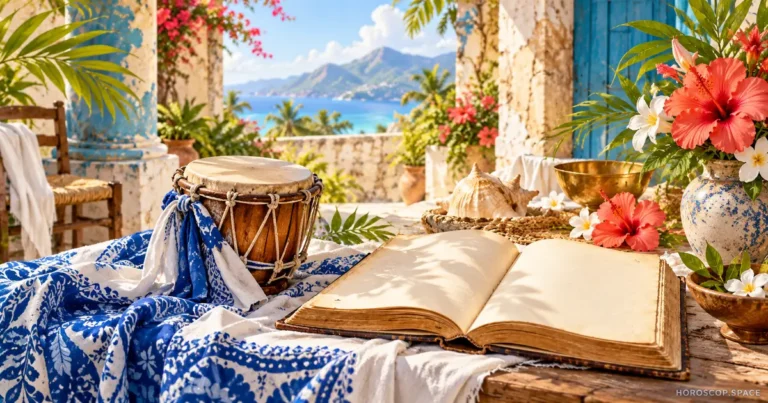
Archaeological excavations have uncovered many musical instruments, including small drums used by shamans.
The drum is regarded as the steed on which the shaman rides during their magical flight. The wood used to make the drum, the skin and the drawings decorating its membrane all have symbolic and cosmological significance.
During a session, the shaman beats the drum to mark out the rungs he climbs – the axis mundi.
The drum serves to bring the shaman into an ecstatic state and eases contact with other beings. Dance, song, music and religion were interwoven elements of magical influence. Songs were chanted monotonously like mantras and were believed to have magical power. Costumes and masks were important in dance, and one particular dance, called the way-yaya, was reserved for rulers.
A closer understanding of curanderismo would reveal similarities between the modern world and the pre-Columbian cultures. The first discoveries in this field were made by the Spanish, who brought their culture and a new religion, only to find that many elements of their own civilisation already existed in South America.
There is also a similarity between shamans and European witches. Witches used the hallucinogenic plant datura in their practices. One of the effects of the plant is a sensation of floating, which explains why witches were credited with the ability to fly on broomsticks.
First published (Polish original): 1 June 2010. Written by astrologers and esoteric specialists working with our editorial team; edited and translated for HOROSCOP.SPACE. © All rights reserved.