The ancient Chinese attached great importance to divination and omens. They tried to explain unusual natural phenomena, which they saw as signs from heaven. They believed in the appearance of unicorns, phoenixes, dragons and red crows. For them, precious objects of jade or gold heralded good fortune.
At the end of the 5th century AD, a treatise on omens entitled the Furuizhi appeared in China. Its author discusses the auspicious signs of earlier eras right up to his own time.
According to the treatise, the births of successive emperors were announced to their mothers by dreams of extraordinary beings and events, which passed their power on to the future rulers through the dream.
Superstitions played an enormous role in the politics of the Chinese state. They heralded times of peace and plenty, but also of war. The interpretation of signs and omens in what is now China goes back many hundreds of years before the Common Era.
Some omens were recorded in stone, such as the inscription in honour of Li Xi, administrator of Wudu province in the 2nd century AD. Carved into the stone were words saying that during his lifetime omens had appeared bearing witness to good government, prosperity and the favour of the gods.
The Chinese recognised as many as 94 omens foretelling the prosperity of the empire. Good omens were not only linked with politics and the state; they also had religious significance. There were Buddhist miracles, described as phenomena confirming the truth and effectiveness of Buddhism and the real presence of the Buddha in the world.
Over time these came to be called miracles and were seen as signs of human faith.
The most popular miracles were images of the Buddha appearing in the most unexpected places, the sudden blooming of a lotus flower – the sacred symbol of Buddhism – the appearance of a white elephant, and so on.
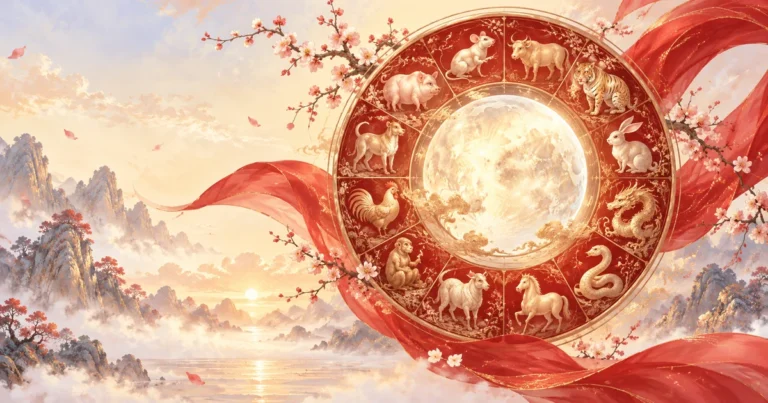
Taoist literature also contains examples of the omens recognised in ancient China, including descriptions of talismans, the 12 signs of the zodiac and their 24 earthly counterparts.
Under some dynasties, reading signs in the sky and on earth was an everyday matter. The sources mention chariots and heavenly helpers, and signs such as the birth of a three-legged cow or a nine-tailed fox.
Chinese omens have a strongly positive colouring. Unlike most peoples, who saw signs of approaching disaster everywhere, the Chinese put the emphasis on good news.